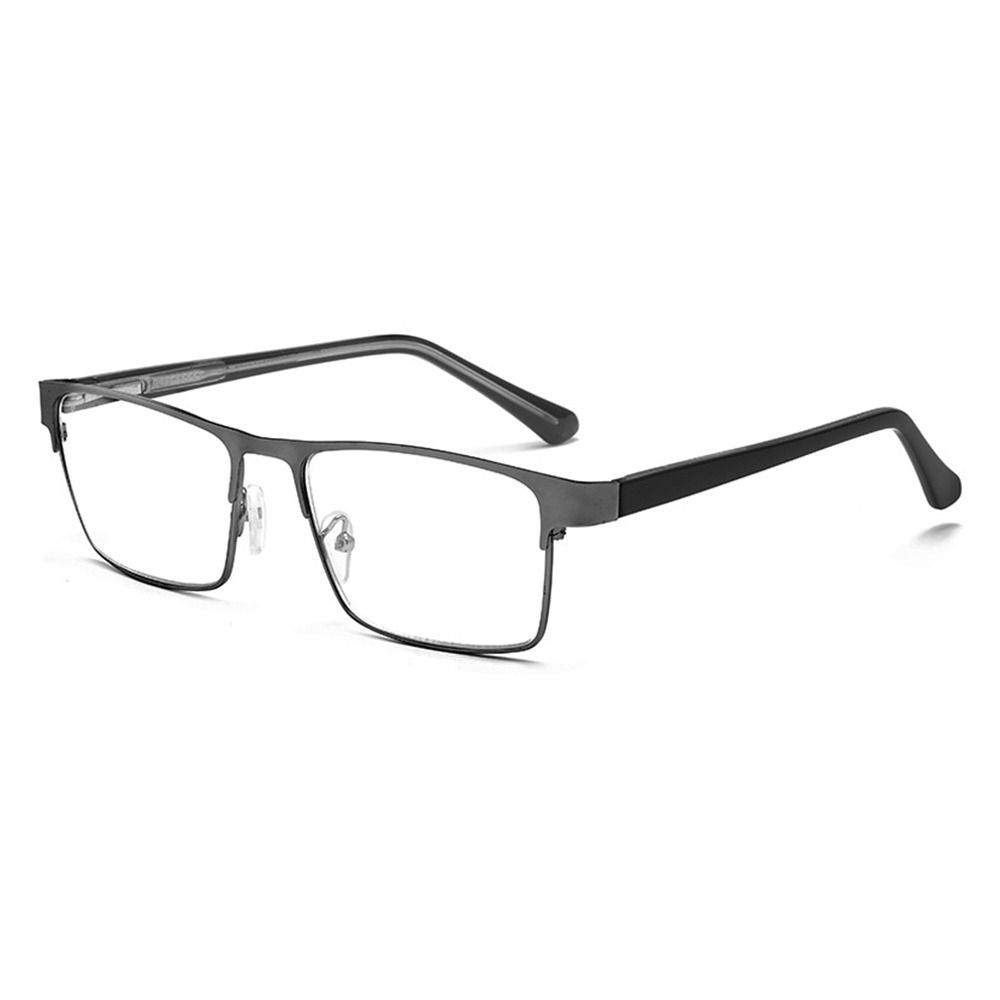
I used to believe these common myths. I ended up buying five pairs of cheap readers, and every single one broke quickly or gave me headaches. I wasted more than $200 before I finally learned the truth about investing in quality eyewear. Here’s what most retailers won’t tell you about anti-blue light lenses and sturdy metal frames.
Buying glasses isn't just about the price tag. It's about protecting your vision and getting a product that lasts. Before you click 'add to cart,' you should understand these three essential facts:
This is the biggest falsehood promoted by discount stores. You might think a $5 pair of reading glasses with lights will perform just as well as a $50 pair, but you'd be mistaken. Extremely cheap glasses use thin, low-grade plastic for the lenses and have fragile joints. The metal frame tends to snap right at the hinge where the arm connects.
Frames advertised as "Classic Metal Frame" often conceal the use of cheap zinc alloys. This type of metal scratches easily and can even cause skin irritation if the coating wears off. If the seller doesn't specify the material—such as 316L Stainless Steel—it's safe to assume it's low quality.
A good pair of anti-blue light reading glasses uses strong, durable materials designed for daily wear at the office or at home. They feel balanced on your nose and won't pinch your temples. Reputable companies also provide excellent customer service because they stand behind their products.
Customers who invest in quality immediately notice the difference. For instance, Melvin and Wes were incredibly helpful and offered me a great price. This demonstrates that quality service and fair pricing go hand in hand. When a company knows its product is worth the cost, it treats its customers well.
Verdict: Always check the frame material. If the seller doesn't list it, look elsewhere. A better frame will last for years, not just weeks.
Many shoppers believe the blue light filter is nothing more than a marketing ploy. They assume staring at a computer screen all day is harmless as long as they can read the text clearly. This is a dangerous assumption.
Blue light is emitted from phones, tablets, and computers. Over time, excessive exposure can lead to eye strain and disrupt your sleep cycle. Cheap anti-blue light lenses might only have a faint yellow tint that doesn't truly filter harmful rays. In some cases, the coating can even distort colors or create annoying reflections.
High-quality anti-blue light lenses block the harmful parts of the light spectrum while keeping your vision clear. The goal is to have office eye protection readers that work effectively without you noticing them. This is especially important for anyone with business presbyopia eyeglasses needs who spends hours in front of a monitor.
Professional guidance is key to understanding your eye health. Dr. Nguyen's evaluation was not only educational but also insightful and relaxing. The doctor provided essential guidance for the next steps in my eyewear journey, confirming that proper eye protection is necessary, especially as we age.