I remember the day I realized I needed reading glasses. It wasn't a sudden thing, but more of a gradual slide into blurry menus and squinting at my phone. It's a common experience, and I'm here to share what I've learned along the way.
For about ten years, even with my regular glasses, I struggled to focus on things up close. It was frustrating! But without them, I could see just fine for close-up work. It felt like a bizarre trade-off. I knew something had to change.
I had LASIK surgery in my late 30s, which gave me perfect distance vision for the first time in my life. The thought of needing readers now felt like a step backward. I started noticing the fine print getting fuzzy around age 40. I resisted it for a while, trying to ignore the telltale signs, but it became increasingly difficult.
I started experimenting with cheap drugstore readers. I bought several pairs and strategically placed them around the house. It worked well enough for a while, but I found myself constantly upgrading the magnification as my vision continued to change. I even started leaving them on while driving, which was definitely a sign that things were progressing!
I talked to my optometrist about my reluctance to wear glasses. I’ve worn contacts for years, and I really didn’t want to switch. She suggested a new prescription where my left eye focuses on longer distances and my right eye is for close-up reading. It's been a game-changer! It's a bit like monovision, and it took some getting used to, but now I barely notice it.
Like many people I know, around the age of 45, I realized I needed some help with reading. Now, a few years later, I've accumulated quite a collection. I even have a bit of a "matchy-matchy" problem and own them in almost every color, including one pair that's rainbow-colored! It helps me find them and adds a little fun to what could be a mundane necessity.
I understand the frustration of needing reading glasses. It can feel like another sign of getting older. But I've learned to embrace it and find solutions that work for me.
Here are some things I’ve learned about selecting the right reading glasses:
Since I spend a lot of time looking at screens, I decided to try anti-blue light reading glasses. I've found that they help reduce eye strain and fatigue, especially after long days working on the computer.
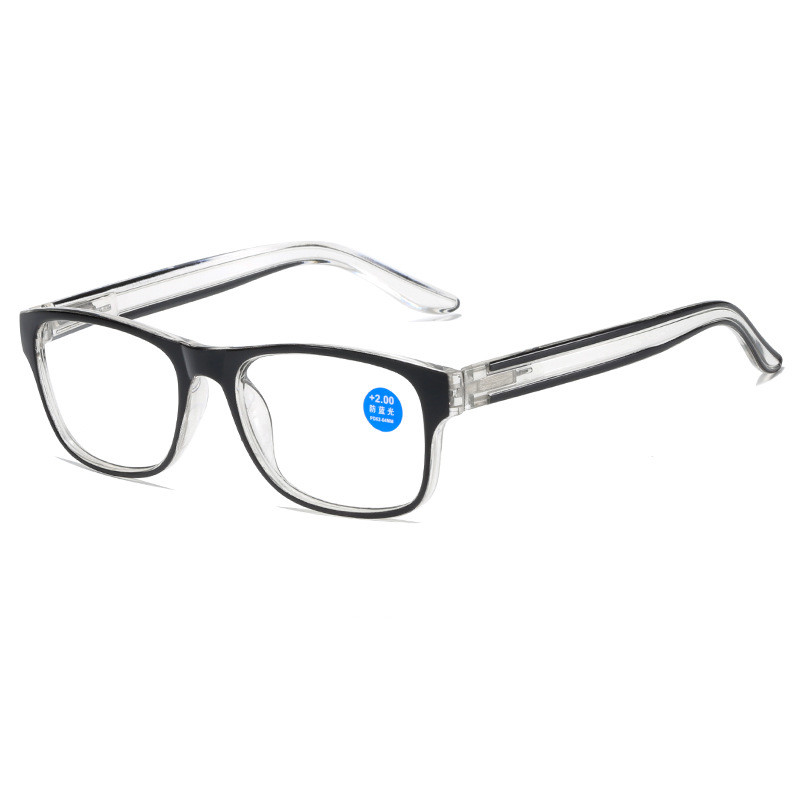
I recently tried a pair of Anti Blue Light Reading Glasses Women Men Clear Sqaure Computer Presbyopic Eyeglasses with spring legs. They have a clear square frame and are surprisingly comfortable. The spring legs are a nice touch, as they don't dig into the sides of my head.